
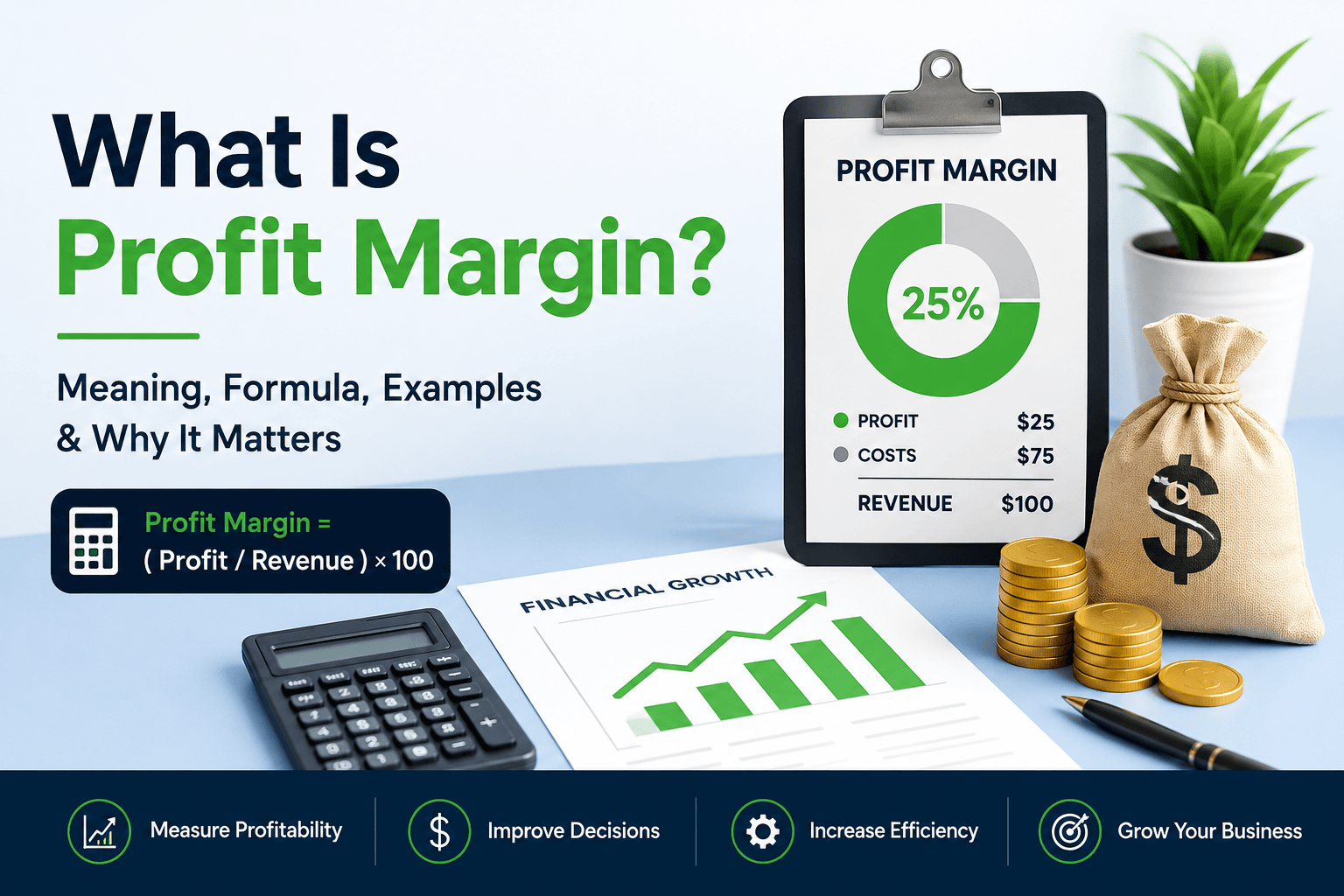
What Is Profit Margin?
Profit margin is one of the most important financial metrics used in business. Whether you run a small business, an online store, a freelance service, or a large company, understanding this metric can help you measure profitability and make smarter business decisions.
Many beginners hear the term profit margin but do not fully understand what it means or how it works. The good news is that profit margin is actually simple once you understand the basics.
In this guide, you will learn what PM means, how to calculate PM, why it matters, and how businesses use PM to measure financial performance.
You can also use our free Calculator to quickly calculate profit margins online.
What Does Profitability Margin Mean?
Profitability margin is a percentage that shows how much net profit a business earns after covering costs.
In simple words:
Profitability margin tells you how much money you keep as profit from your total sales.
For example:
If a business sells a product for $100 and keeps $20 as profit, the Profitability margin is 20%.
Profitability margin helps businesses understand:
- profitability
- pricing efficiency
- financial performance
- business sustainability
Profit Margin Formula
The standard profitability metric formula is:
= (Profit ÷ Revenue) × 100
This formula converts profit into a percentage.
Simple Breakdown
Revenue
Revenue means:
- total sales income
- total money earned
Profit
Profit means:
- revenue minus expenses
Multiply by 100
This converts the result into percentage form.
Example
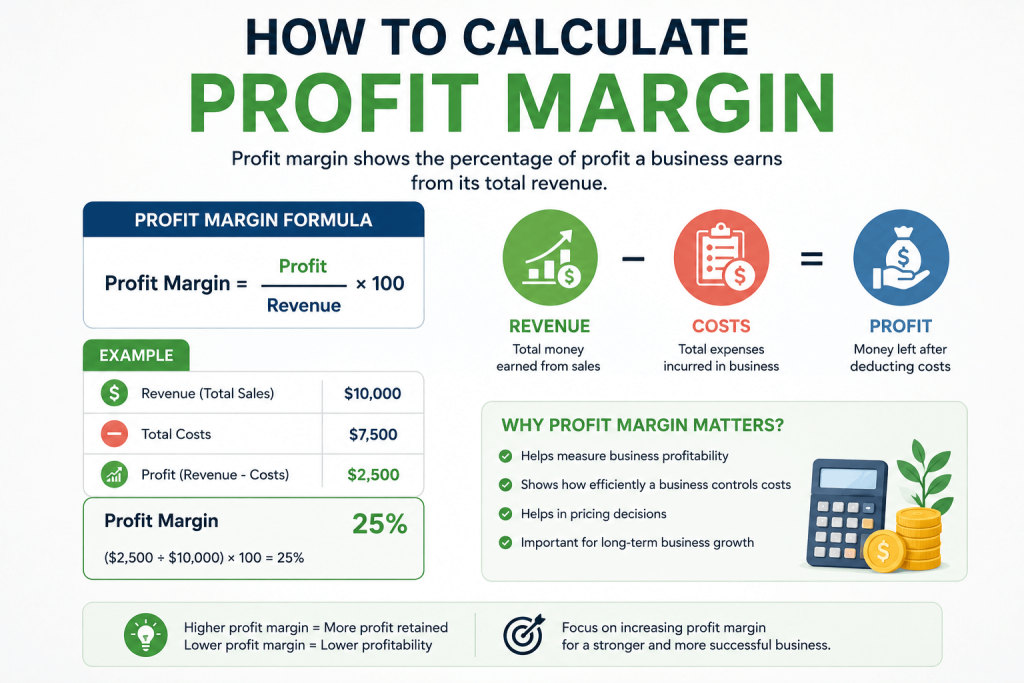
Let’s understand profitability metric with a simple example.
Example
Suppose:
- Product selling price = $200
- Total cost = $150
Step 1 — Calculate Profit
Profit = Revenue – Cost
$200 – $150 = $50
Step 2 — Apply Formula
= (50 ÷ 200) × 100
= 25%
Final Result
The business has a:
25% profit margin
This means the company keeps 25% of its revenue as profit.
Why Profit Margin Is Important
This metric is important because it helps businesses measure financial health and efficiency.
A good margin usually means:
- strong profitability
- efficient operations
- healthy pricing strategy
A low margin may indicate:
- high expenses
- poor pricing
- inefficient business operations
Businesses use this margin to improve:
- pricing strategies
- cost management
- profitability
- business growth
Types of Profit Margin
There are different types of profit margins used in business.
Gross
Gross margin measures profit after subtracting production or product costs.
It focuses mainly on:
- product profitability
- production efficiency
Profit margin Operating
Operating profitability margin measures profit after operating expenses, such as:
- salaries
- rent
- utilities
- marketing costs
Net
Net profit measures the final profit after all expenses, taxes, and costs.
This is one of the most commonly used profit margin metrics.
Good Profit Margin vs Bad Profit Margin
There is no universal perfect margin because every industry is different.
However:
Good Profit Margin
Usually means:
- healthy business performance
- strong profitability
- efficient operations
Bad Profit Margin
Usually means:
- low profitability
- high costs
- weak pricing strategy
Businesses constantly try to improve profit margins.
Profit Margin in Small Businesses
Small businesses use this margin to:
- measure profitability
- set prices
- control expenses
- improve financial performance
For example:
A small business owner may calculate this metric to see whether products generate enough profit.
This helps businesses avoid losses and improve growth strategies.
Profit Margin in Online Businesses
Online businesses also rely heavily on profitability margin calculations.
Examples include:
- ecommerce stores
- dropshipping businesses
- freelancers
- digital agencies
- online service providers
Online businesses often track:
- advertising costs
- software expenses
- delivery costs
- operating expenses
to improve profit margins.
Profit Margin vs Revenue
Many beginners confuse revenue with profit margin.
However, both are different.
Revenue
Revenue is:
- total sales income
Profit Margin
- percentage of profit earned from revenue
A company can have high revenue but still have low profit margins if expenses are too high.
Profit Margin vs ROI
Both are also different metrics.
Profit Margin
Measures:
- profitability from revenue
ROI
Measures:
- return compared to investment
Businesses often use both metrics together to analyze performance.
You can also use our ROI Calculator to calculate return on investment easily.
How Businesses Improve Profitability Margin
Businesses constantly work to improve profit margins.
Some common strategies include:
- reducing costs
- increasing prices
- improving efficiency
- reducing waste
- improving marketing performance
- optimizing operations
Even small changes can significantly improve profitability over time.
Common Profitability Margin Mistakes
Many beginners make mistakes while calculating this.
Ignoring Hidden Costs
Some businesses forget to include:
- taxes
- shipping fees
- software costs
- operational expenses
This creates inaccurate profitability margin calculations.
Incorrect Pricing
Setting prices too low may reduce profitability.
Businesses need pricing strategies that balance:
- customer demand
- expenses
- profit goals
Focusing Only on Revenue
High revenue does not always mean high profits.
Businesses should focus on:
- profitability
- efficiency
- sustainable growth
Using a Profitability Margin Calculator
Manual calculations are simple, but online calculators save time and reduce mistakes.
Using a Profitability Margin Calculator allows you to:
- calculate results instantly
- avoid formula errors
- compare products quickly
- improve decision-making
Our free Profitability Margin Calculator is useful for:
- business owners
- freelancers
- marketers
- ecommerce sellers
- students
Profitability Margin in Pakistan
Profit margin calculations are also important for businesses in Pakistan.
Small businesses, freelancers, ecommerce stores, and online sellers frequently calculate profit margins to:
- analyze product profitability
- improve pricing
- manage expenses
- increase earnings
You can also explore our Profit Margin Calculator in Pakistan for local business calculations and PKR-based examples.
FAQs
What is profitability margin?
Profit margin is the percentage of profit earned from total revenue.
How do you calculate profitability margin?
Profitability margin is calculated using this formula:
Profit Margin = (Profit / Revenue) × 100
Why is profitability margin important?
It helps businesses measure profitability and financial performance.
What is a good profitability margin?
A good margin depends on the industry, business type, and operating costs.
Can small businesses use profitability margin?
Yes. Small businesses frequently use profitability margin calculations to improve pricing and profitability.
Is profitability margin the same as revenue?
No. Revenue is total income, while the profitability margin measures the percentage of profitability.
Conclusion
Profit margin is one of the most important business metrics for measuring profitability and financial performance. It helps businesses understand how efficiently they generate profit from sales and revenue.
Whether you run a small business, an ecommerce store, or a freelance service, understanding profit margin can help you make smarter financial decisions and improve business growth.
To calculate results quickly and easily, you can use our free Profit Margin Calculator online.